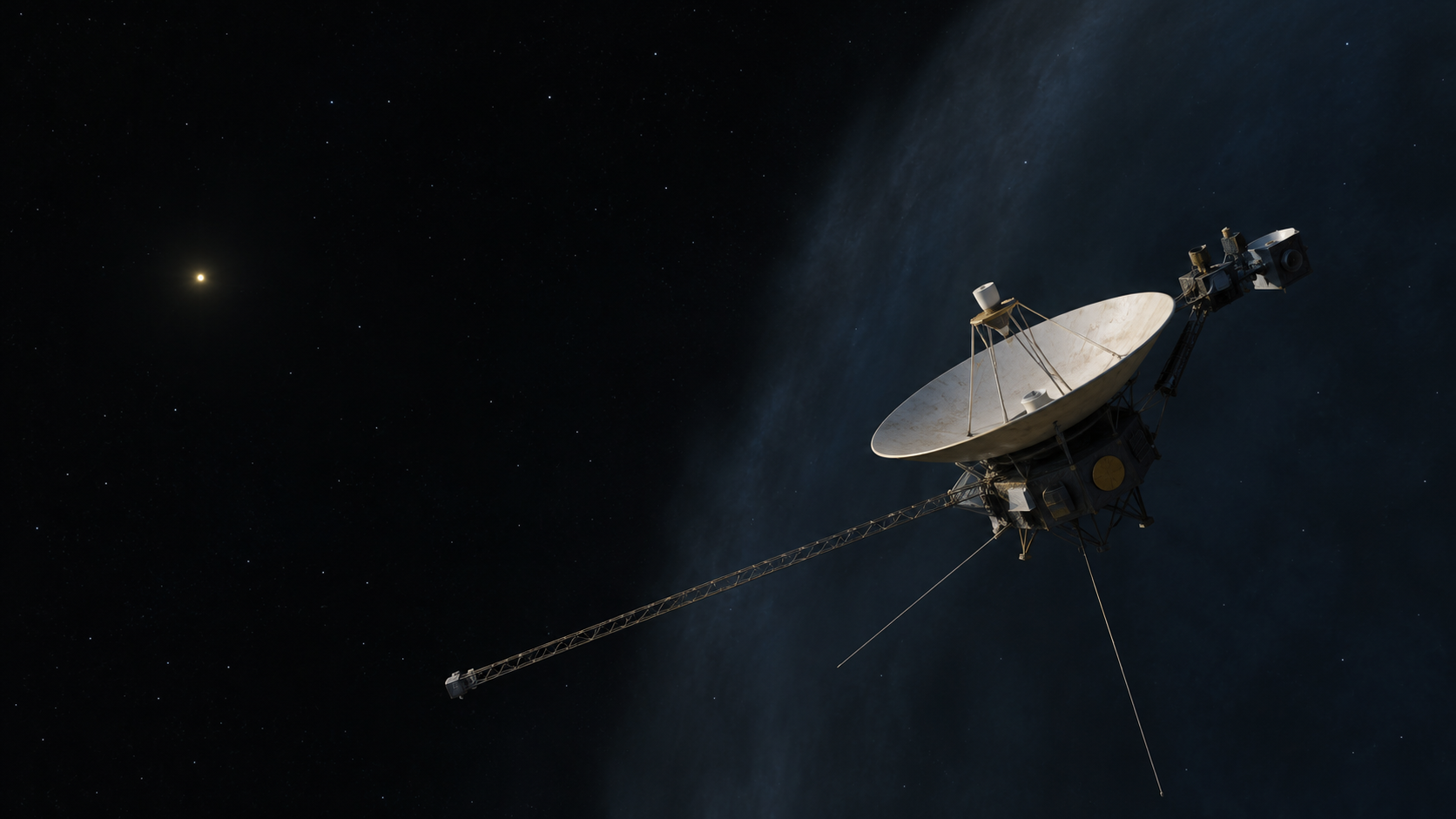
Unusual Triple-Star System Found Just 28 Light-Years Away
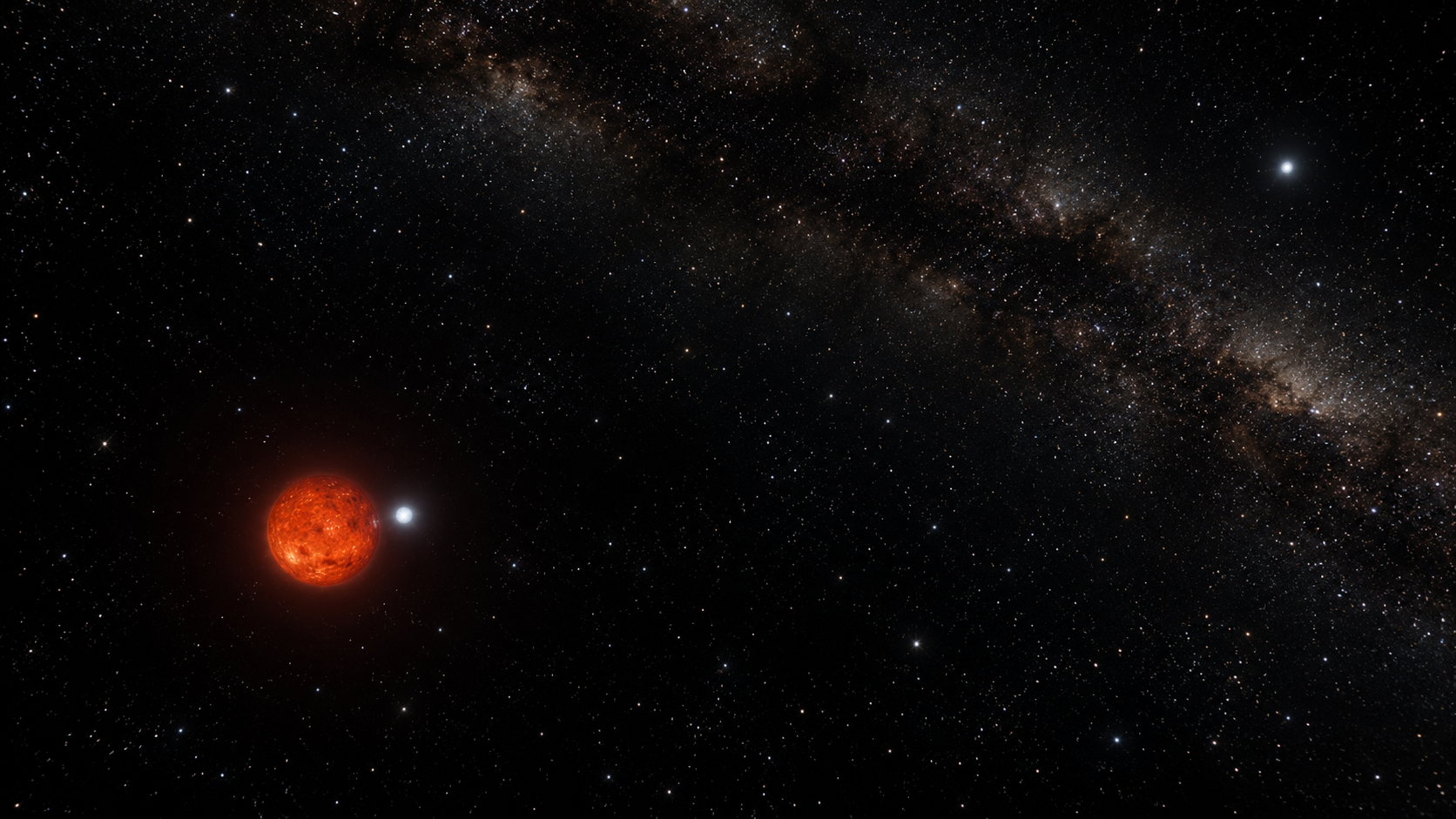
Astronomers have discovered one of the most unusual stellar systems in the Sun’s neighborhood. Welopōʻai lies about 28 light-years away and contains a red dwarf and two white dwarfs — the dense remnants of Sun-like stars. It is the closest known triple system containing multiple white dwarfs.
The discovery was made by chance during an exoplanet search with the SPIRou instrument on the Canada-France-Hawaiʻi Telescope. The red dwarf’s velocity changed by nearly 16 kilometers per second, far too much to be caused by an ordinary planet. Follow-up imaging with Gemini North confirmed a hidden white dwarf companion.
The inner pair completes an orbit in about 9.83 years. The newly identified white dwarf has a measured mass of 0.618 Suns with about 0.7% precision, making it one of the most accurate measurements for a nearby object of this type. The second white dwarf orbits much farther out, with a period longer than a thousand years.
The system’s history is the main puzzle. Before becoming a white dwarf, the star should have expanded dramatically and likely engulfed the red companion or greatly altered its orbit. Instead, the pair survived in an unexpectedly wide and stable configuration. Further observations may test models of common-envelope evolution and gravitational interactions in triple systems.
Announcement from the Trottier Institute and the research paper.
Check clouds for your location on the NightSkyCast map