ALMA Reveals a Giant Magnetic Loop Around Mira A
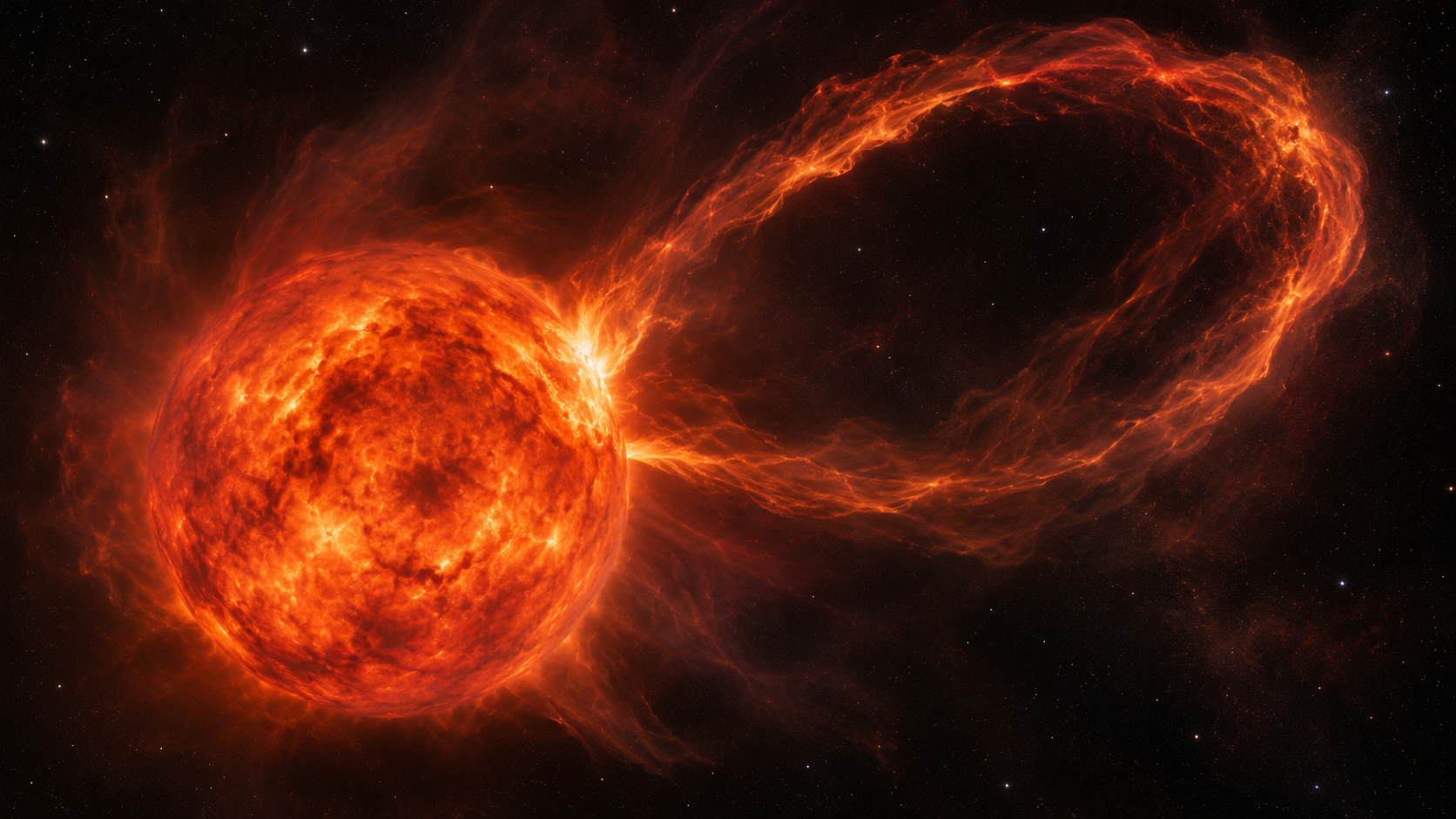
On 23 November 2026, the European Southern Observatory released a new ALMA image of the red giant Mira A, located about 330 light-years away in the constellation Cetus. For the first time, it directly resolves an enormous loop of material expelled by the star, extending as far as 10 astronomical units — roughly the distance from the Sun to Saturn.
The eruption resembles a coronal mass ejection from the Sun, but it is much larger and more energetic than the most powerful known stellar flares. Polarisation measurements with ALMA confirmed a strong magnetic field within the structure. The researchers also traced the loop back to a bright hot spot observed on Mira A’s surface two years earlier.
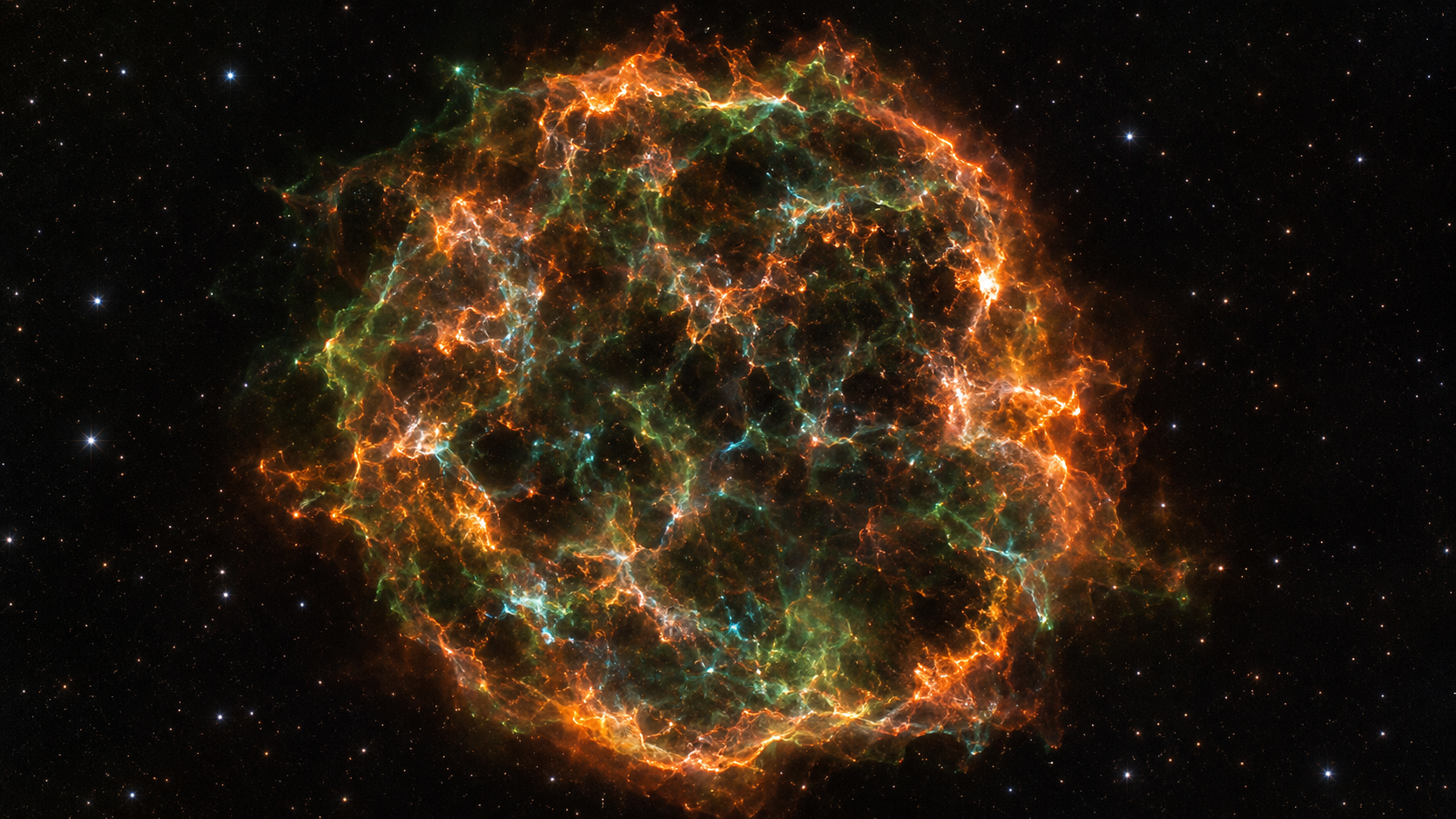
The result matters for understanding the final stages of stellar evolution. Red giants were generally thought to lose material mainly through a comparatively gentle wind: starlight pushes on dust grains and gradually carries them outward. The observations of Mira A suggest that, at least for this star, repeated magnetic eruptions play a major — and possibly dominant — role.
The expelled matter later becomes raw material for new stars and planets, enriching the interstellar medium. Details are available from ESO and in two Astronomy & Astrophysics papers on the magnetic loop and the hot spots.
Check the clouds for your location on the NightSkyCast map