Your first evening with binoculars
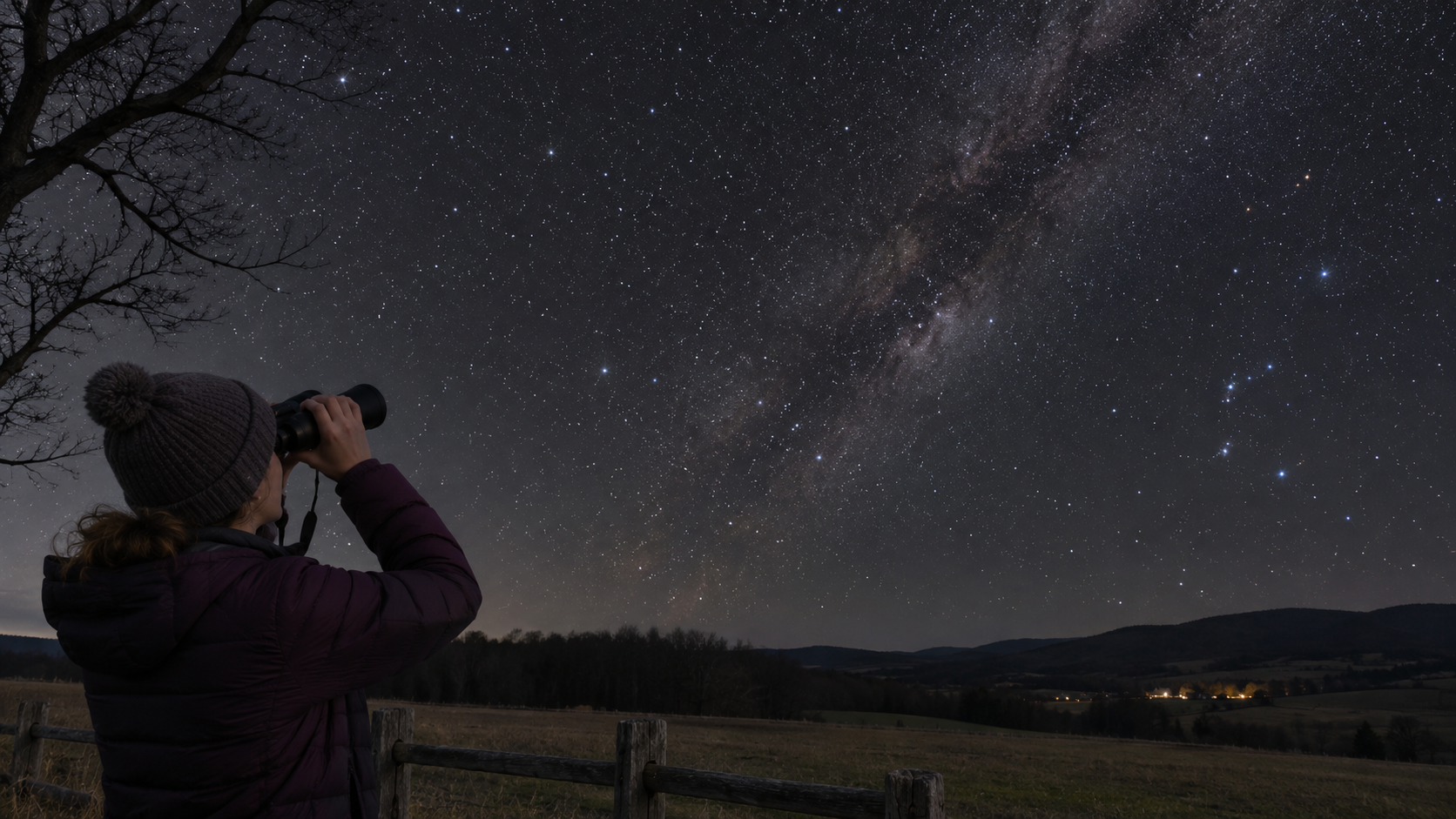
Ordinary binoculars can be a comfortable first tool for exploring the sky. They are light, quick to use and show a wide field, making it easier to find targets than with a high-magnification telescope. Start with the Moon: craters are especially clear along the boundary between light and shadow. When moonlight is not an issue, try the Pleiades or bright parts of the Milky Way under a dark sky.
Before observing, check which objects are visible from your location that night. Planets, constellations and the Moon change position or observing hours, so do not rely on an undated chart. Rest your elbows on a table or railing to steady the view. If the binoculars are heavy, a tripod or hand support can make observing much easier.
Do not rush to magnify
Look with the naked eye first and choose a reference point. Then bring the binoculars up smoothly, without touching the lenses. Never point optical equipment at the Sun; this can damage your eyesight. Note what you saw and repeat the observation another evening to spot changes.
Check clouds for your location on the NightSkyCast map