Why Jupiter shimmers in a telescope
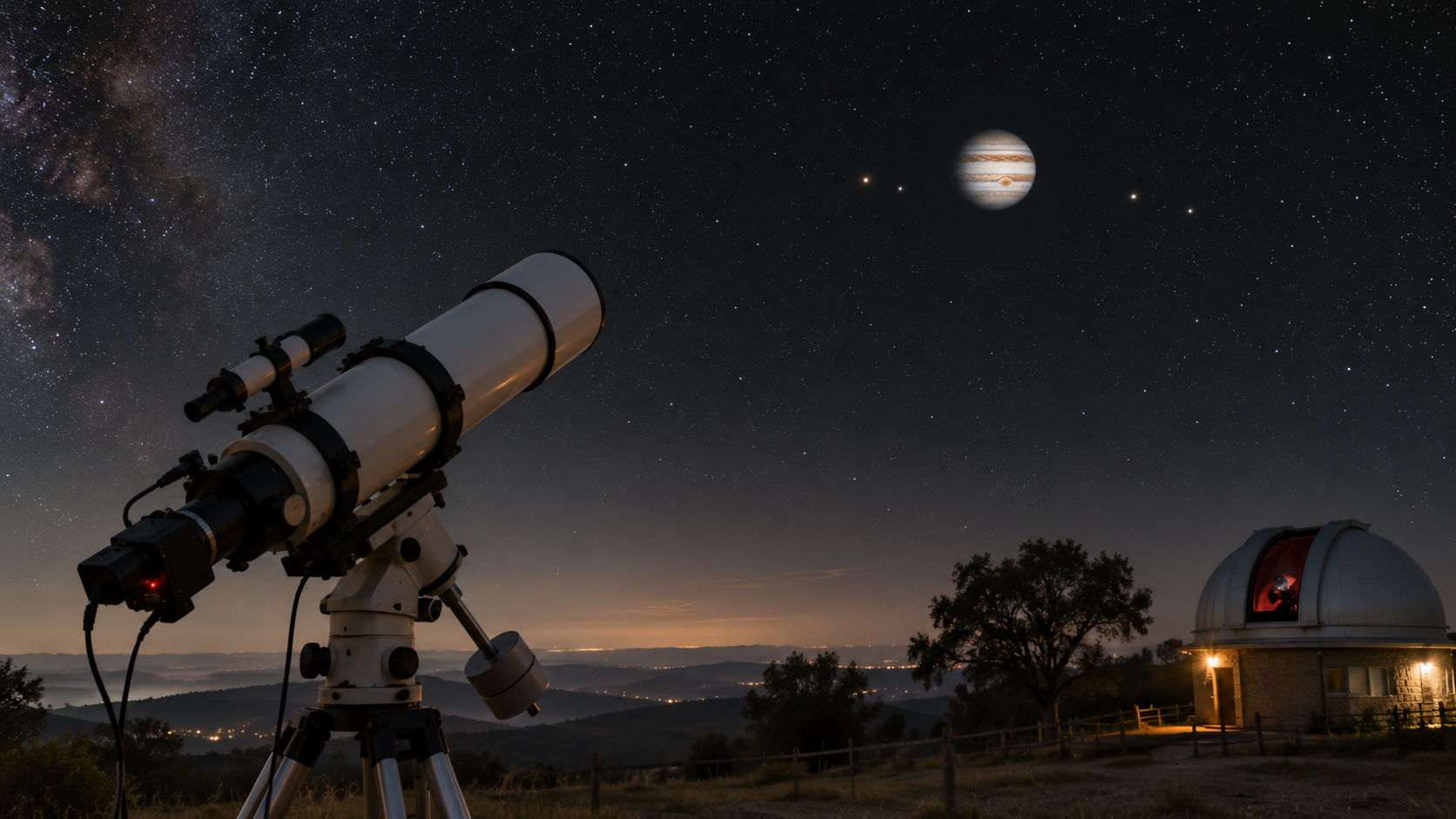
Jupiter can look shaky or blurred even when the sky is clear. A common cause is atmospheric turbulence: air layers at different temperatures continually bend the light, making the planet’s image wobble. The effect becomes stronger when Jupiter is low above the horizon because its light travels through more atmosphere.
Another cause is vibration in the telescope or tripod. Touch the eyepiece and see how long the image takes to settle. If it keeps shaking, check that the tripod legs are firm, fittings are tightened and the mount is balanced. Even footsteps nearby can cause vibrations on soft ground.
Improving the view
Let the telescope cool outdoors so its optics approach the surrounding air temperature. Observe when Jupiter is higher and do not start at the maximum magnification: it enlarges both details and blur. The image may sharpen briefly between turbulent moments, so watch patiently and take breaks. Magnification alone cannot fix poor seeing or an unstable support.
Check clouds for your location on the NightSkyCast map