Star S301 could reveal the spin of our galaxy's central black hole
On 19 August 2026, ESO announced the discovery of S301 near Sagittarius A*. VLTI observations indicate that it reaches about 25,000 kilometres per second near closest approach and completes an orbit in 8.7 years. Researchers hope to use its motion to investigate the central black hole's spin.
Such a star acts as a natural measuring instrument. Astronomers cannot send a probe to the Galactic centre, but they can repeatedly measure the star's position and compare its path with calculations. More precise measurements and longer observing records reveal more information.
In general relativity, a rotating massive system affects the surrounding spacetime. Small deviations in motion that cannot be explained by the simplest picture of a stationary central body are therefore particularly valuable.
Finding a suitable star and completing a spin measurement are separate milestones. A reliable conclusion requires further observations and checks for interference, including the influence of other objects.
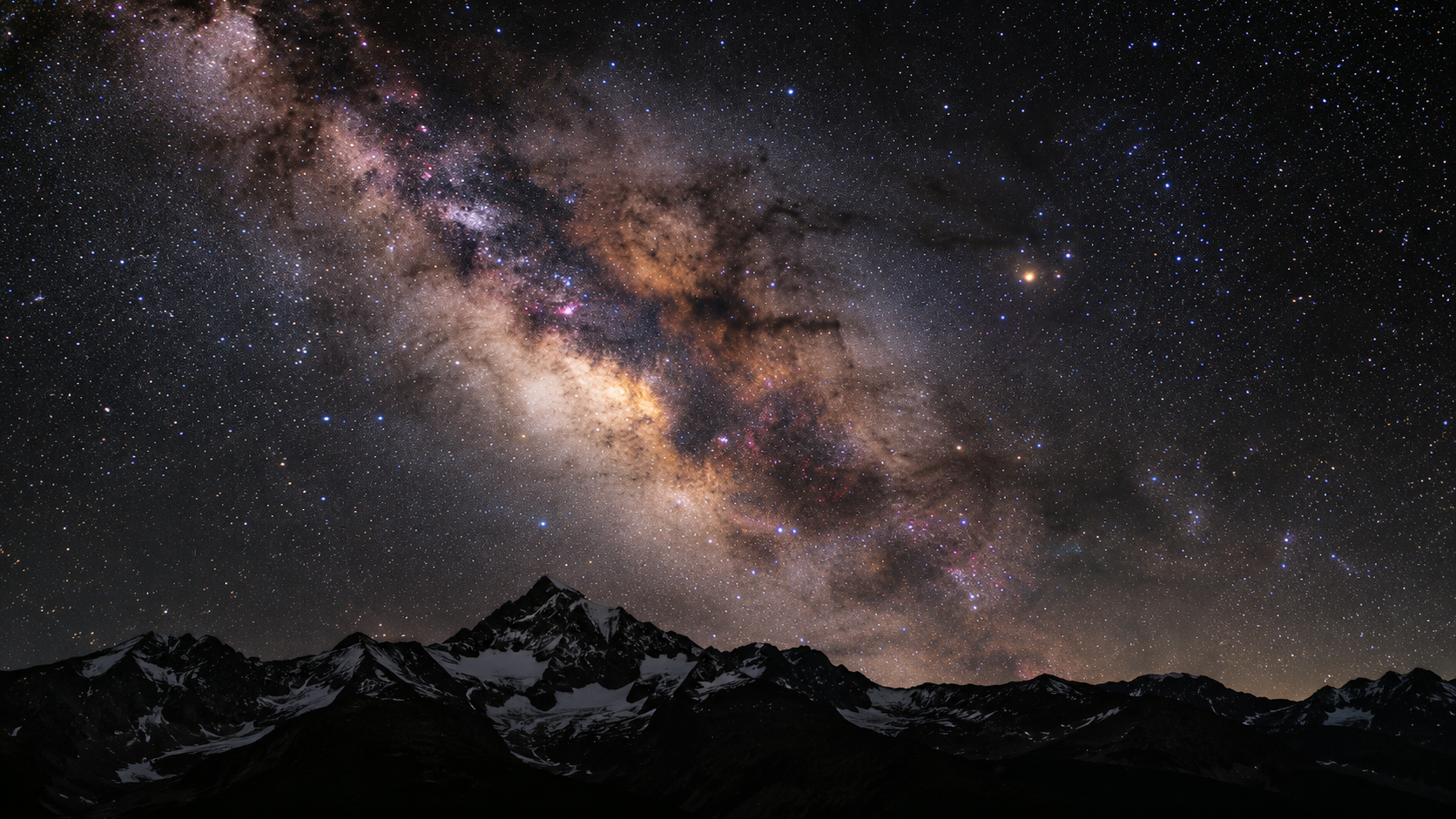
Dense dust hides the Milky Way's centre from ordinary optical observation. Even under excellent rural skies, an amateur will not see S301 through an eyepiece. The visible band of the Milky Way nevertheless helps place the region of these extreme motions in context.
Source: ESO.
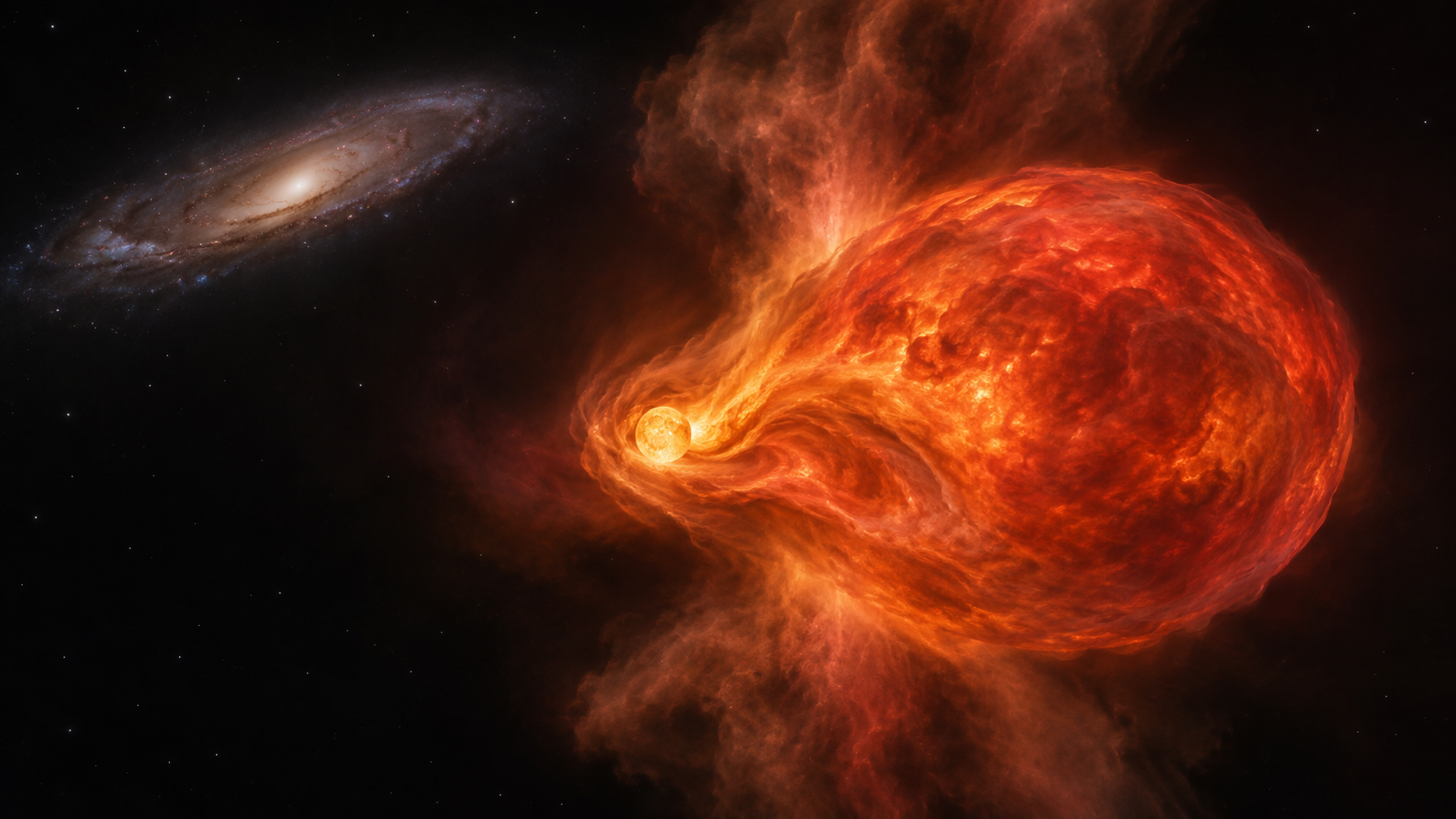
Cover: AI-generated illustration, not a mission image.
Check clouds for your location on the NightSkyCast map