Saturn through a small telescope
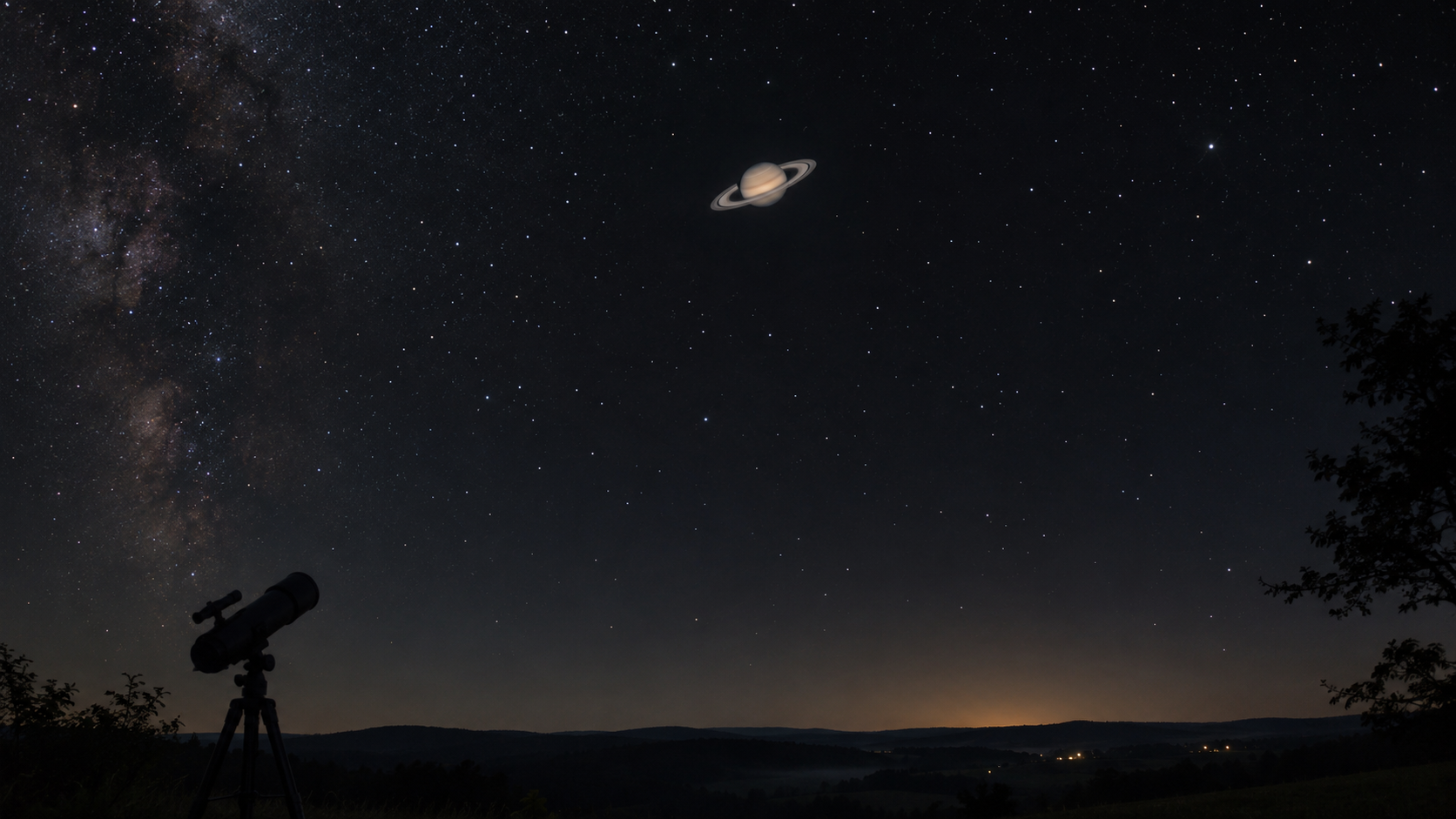
Even a small telescope can show Saturn’s most distinctive feature: its rings. You do not need to chase maximum magnification for a first view. Begin low so the planet is easy to find, then increase power gradually while the image remains sharp. If Saturn becomes blurry, return to the previous eyepiece; more magnification does not always reveal more detail.
The rings and planetary disk are easier to see when Saturn is high above the horizon and the atmosphere is steady. Details can be modest in a small instrument: narrow gaps in the rings are not always visible, and the view depends on the telescope’s aperture, optical condition and observing conditions.
Prepare to observe
Check Saturn’s current position for your location and choose a time when it is not too low. Let the telescope cool outside, find the planet with the finder first and use a steady support. Do not stare continuously: the planet may look much sharper during brief steady moments. Never look at the Sun through a telescope.
Check clouds for your location on the NightSkyCast map