New Method Speeds Up Pulsar Searches by About a Million Times
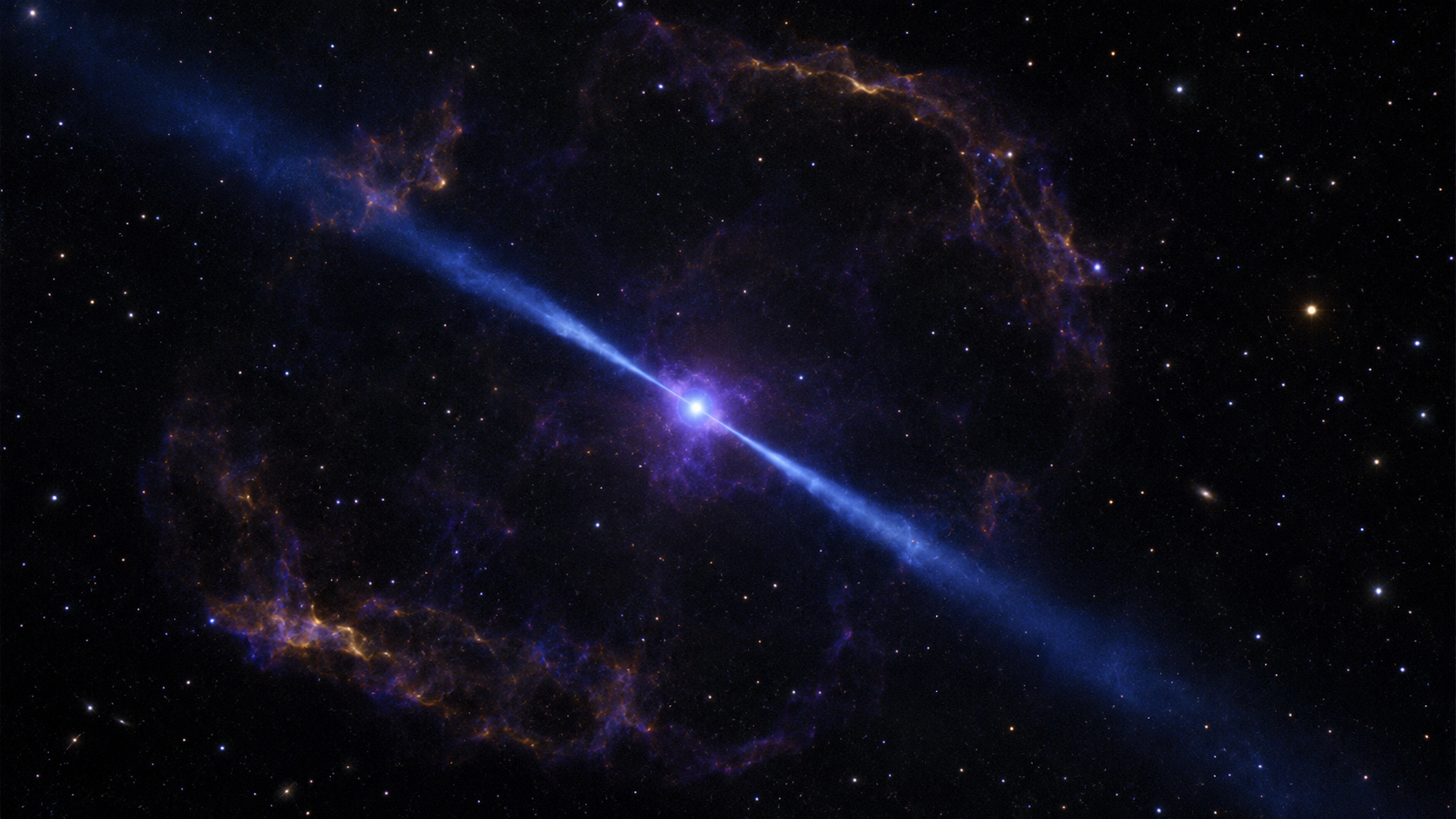
An international research team has developed a way to search for faint pulsars in gamma-ray data roughly a million times faster than previous methods. The result was announced on 19 November 2026 and is described by NASA.
Pulsars are rapidly rotating neutron stars that sweep narrow beams of radiation through space. They are particularly difficult to identify in gamma-ray observations: only a small number of photons arrive from each object, buried among background signals. Researchers must simultaneously test the source’s position, spin rate and the rate at which its rotation is slowing.
The new approach turns the search into a geometric problem on a high-dimensional lattice and uses algorithms originally developed for cryptography. The team tested it on 15 years of data from the Fermi telescope. It detected the isolated pulsar PSR J1622−7204, which rotates 261 times per second.
The analysis required the equivalent of about ten hours on a standard processor. The previous best method failed to find the object even after computing work that would have taken one processor roughly 600 years. The researchers now want to adapt the algorithm to find pulsars in binary systems, where orbital motion around a companion star distorts the signals even further.
Check the clouds for your location on the NightSkyCast map