Hubble prepares gravitational-lens targets for Roman
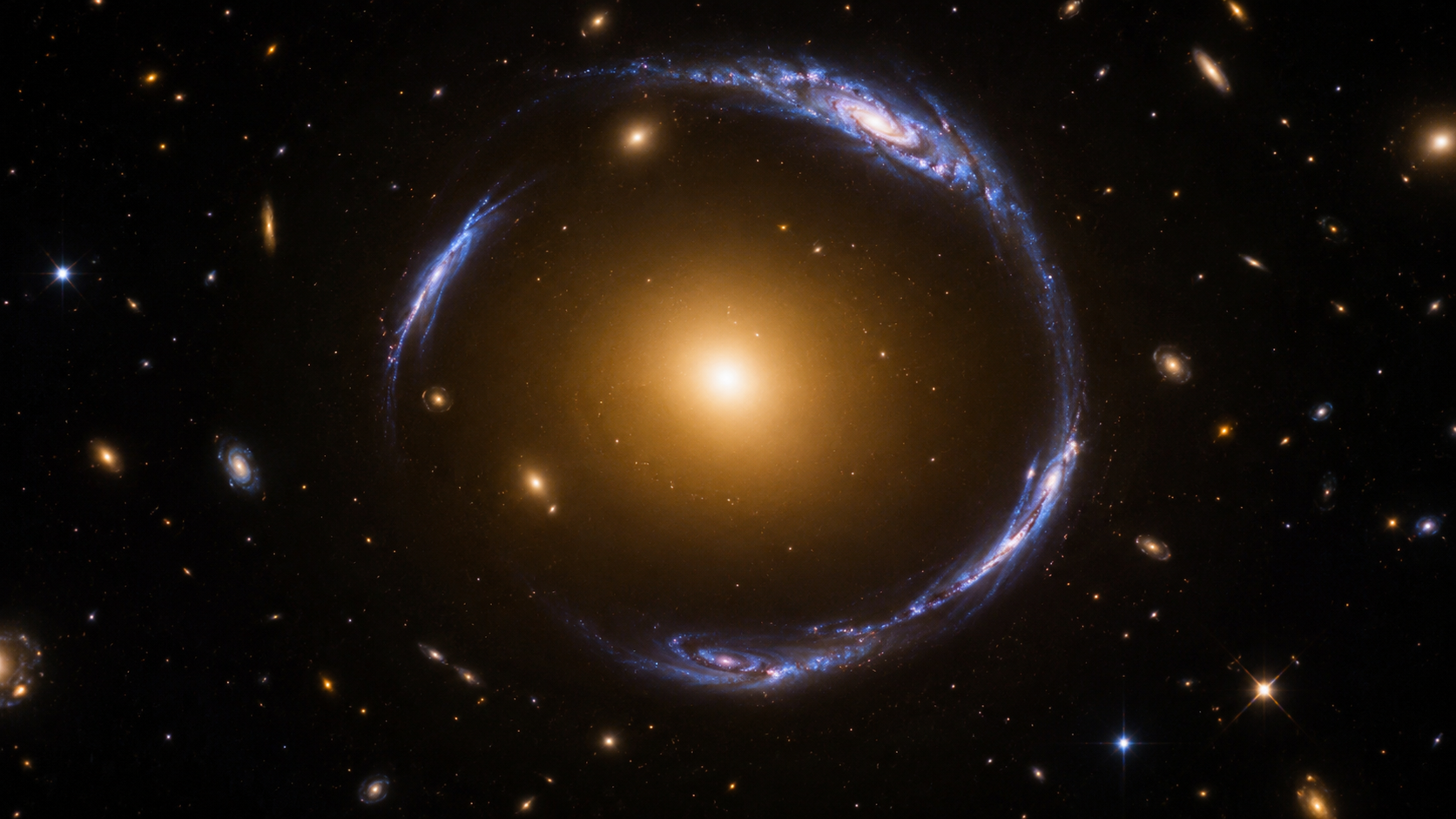
On 12 November 2026, NASA published a collection of strong gravitational lenses imaged by Hubble that will support observations by the Roman Space Telescope. The curved arcs appear when the mass of a foreground galaxy bends light from a more distant source.
A gravitational lens is not a glass object in space. It is gravity acting on light. The amount and shape of the distortion help researchers estimate how mass is distributed in the foreground galaxy, including invisible dark matter.
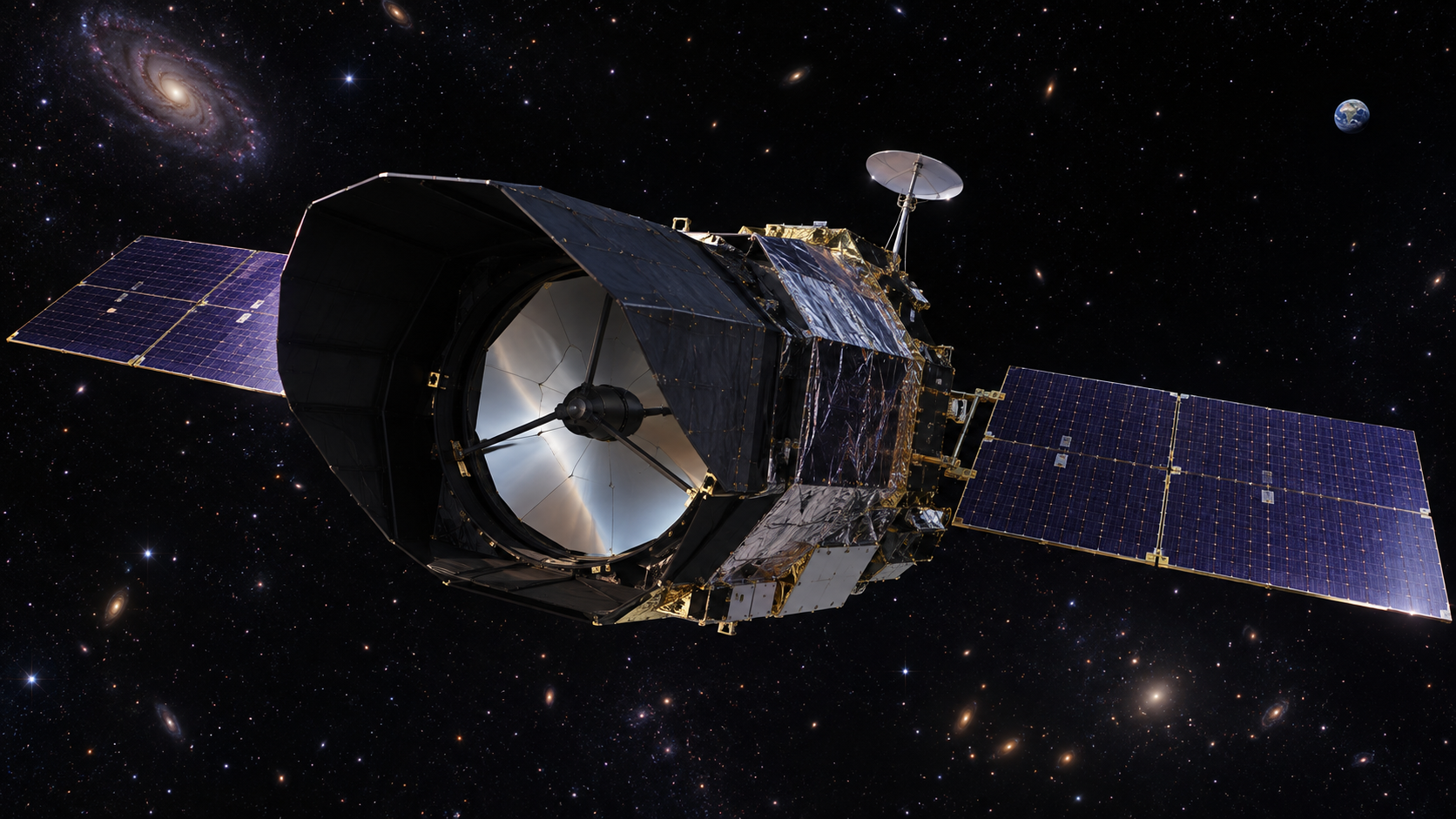
Hubble provides detailed images of individual lenses. Roman will cover a much wider field and should find many more such systems. The telescopes complement each other: one can build a large sample, while the other examines especially interesting objects in detail.
Researchers also plan to search for small irregularities in the arcs that may indicate clumps of dark matter. This is a scientific test of models, not an announcement that the nature of dark matter has already been settled.
Most of these arcs are too faint and small for amateur astrophotography. Some massive galaxy clusters are accessible as deep-sky targets, however, linking a faint patch in an eyepiece with the physics revealed by professional instruments.
Source: NASA.
Cover: AI-generated illustration, not an official image.
Check clouds for your location on the NightSkyCast map