Hubble finds missing oxygen in nearby dwarf galaxies
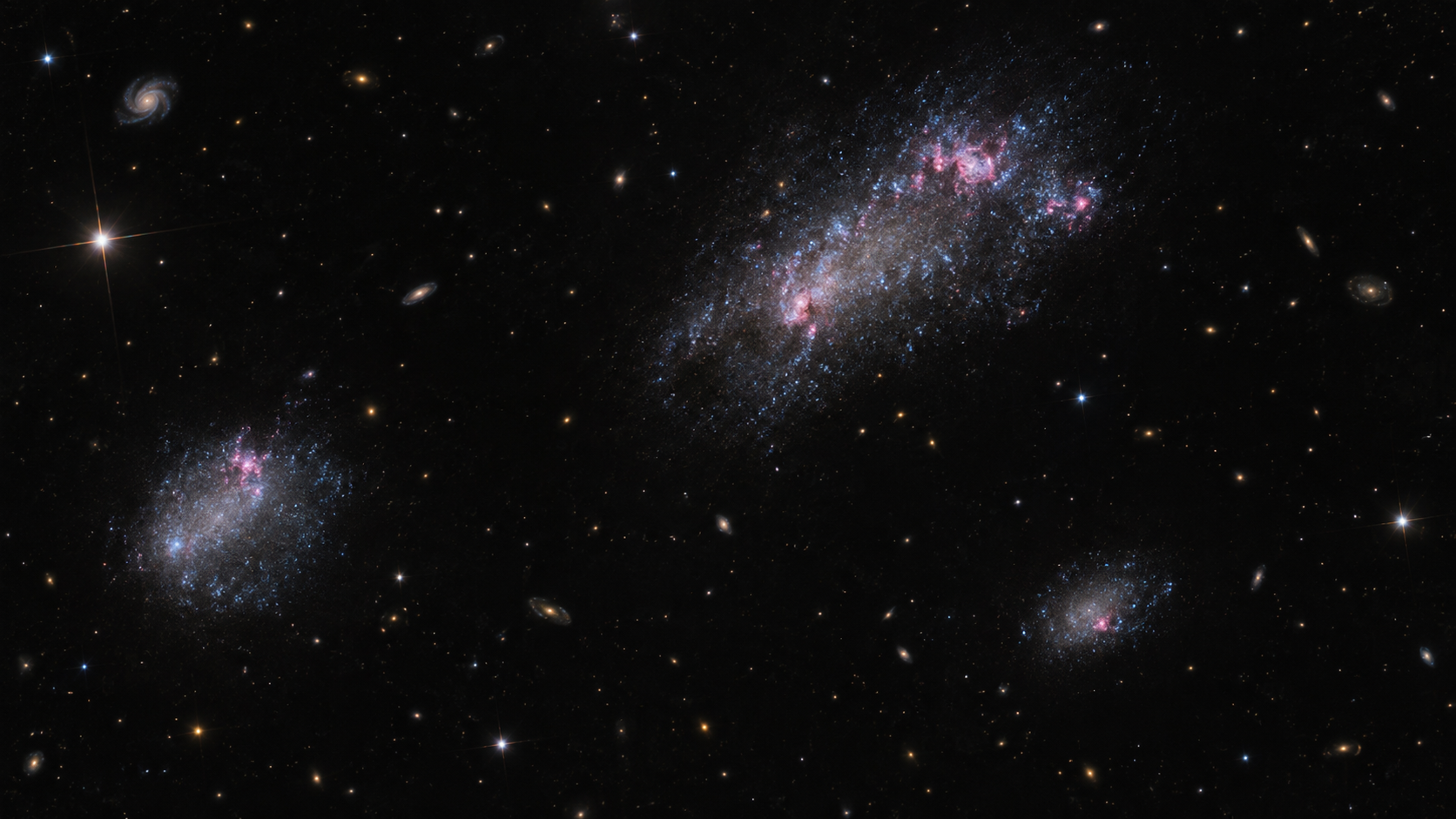
On 2 November 2026, STScI presented a Hubble study of oxygen in nearby dwarf galaxies. The observations indicate that these small systems retain only a small fraction of the oxygen expected from their stars. Much of the heavier material probably escapes the galaxies.
Astronomers call oxygen a “metal,” along with every element heavier than hydrogen and helium. This does not mean metallic oxygen in the everyday sense. The term describes the chemical enrichment of matter by generations of stars.
Massive stars create new elements and return them to space through winds and explosions. A dwarf galaxy has weaker gravity, making it easier for heated gas to escape. The chemical evolution of small and large galaxies can therefore differ substantially.
Astronomers estimate composition through spectral lines from gas and stars. They cannot count every atom directly, so the conclusion relies on comparing measurements with physical models. “Missing oxygen” describes a shortfall relative to the expected balance, not a complete absence of the element.
The result helps researchers understand how material moves between galaxies and intergalactic space. Dwarf systems are particularly useful laboratories because the consequences of gas loss are stronger and easier to compare with calculations.
Source: STScI.
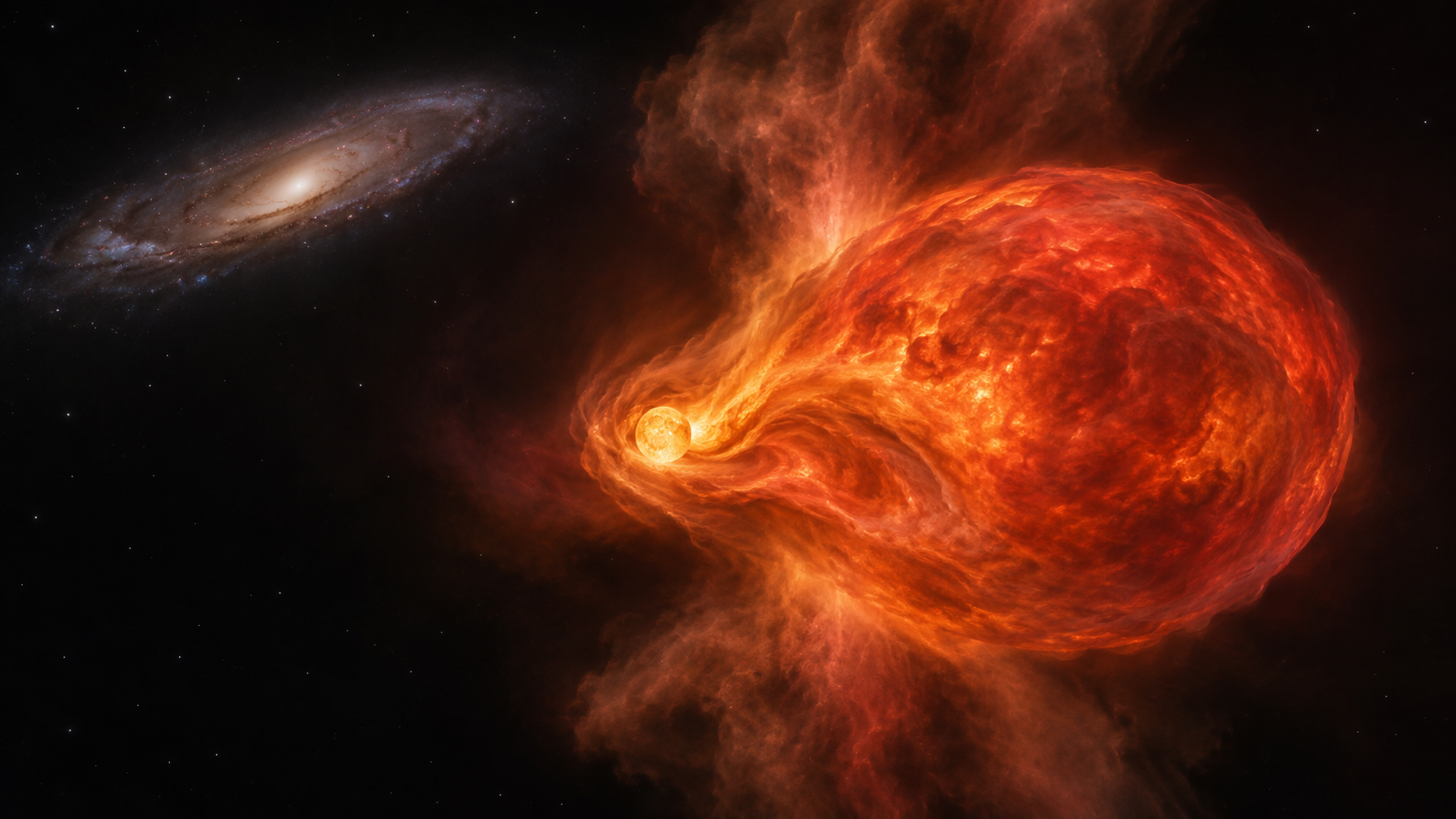
Cover: AI-generated illustration, not an official image.
Check clouds for your location on the NightSkyCast map