ESO assesses how huge satellite fleets could change the night sky
On 1 July 2026, ESO presented research on the astronomical impact of large satellite constellations. It examines proposals involving more than 1.7 million spacecraft in total. This is a possible launch scenario, not the number of satellites already in orbit.
Numbers alone do not determine the observing impact. Brightness, orbital altitude, reflective-surface orientation, and timing relative to sunset or sunrise also matter. Satellites shine by reflected sunlight, so their visibility depends on illumination geometry.
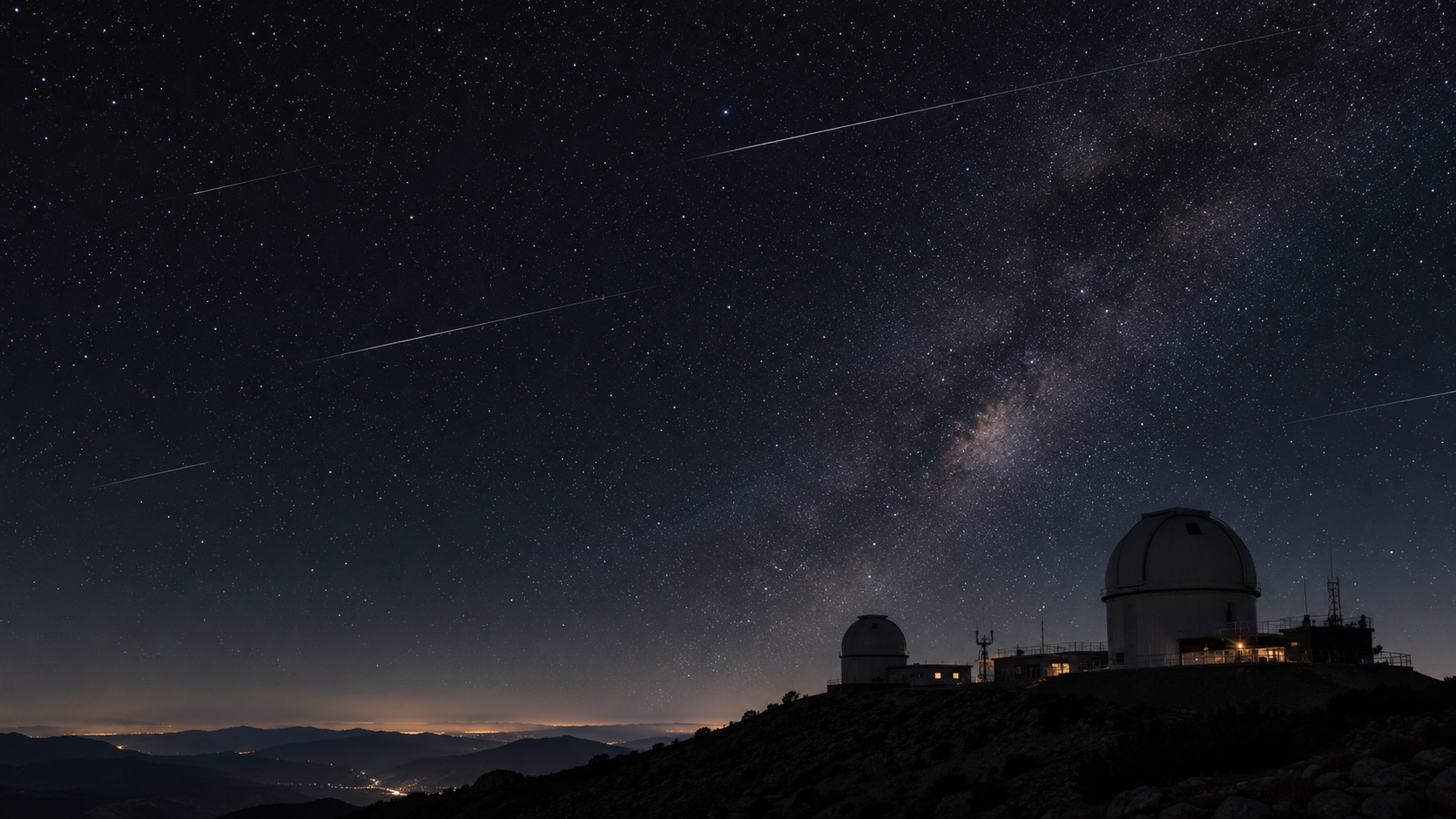
In photographs, the problem appears as streaks crossing star fields. For scientific cameras, the effects can be more complicated: a bright trail interferes with measurements of faint objects, and processing cannot always recover lost data. Interference is particularly troublesome when researchers need to catch a rare, brief event.
Amateur observers should distinguish satellite trails from meteors. Consecutive exposures can reveal how a source moved, but a single streak does not always identify the object confidently.
The study makes protecting dark skies an issue extending beyond ground lighting. Even a remote site without streetlights is exposed to reflections above the atmosphere. Cloud forecasting remains a separate part of preparation: clear skies and freedom from artificial interference are different conditions.
Source: ESO.
Cover: AI-generated illustration, not a telescope image.
Check clouds for your location on the NightSkyCast map