Chandra explains the repeating outbursts of AT 2016blu
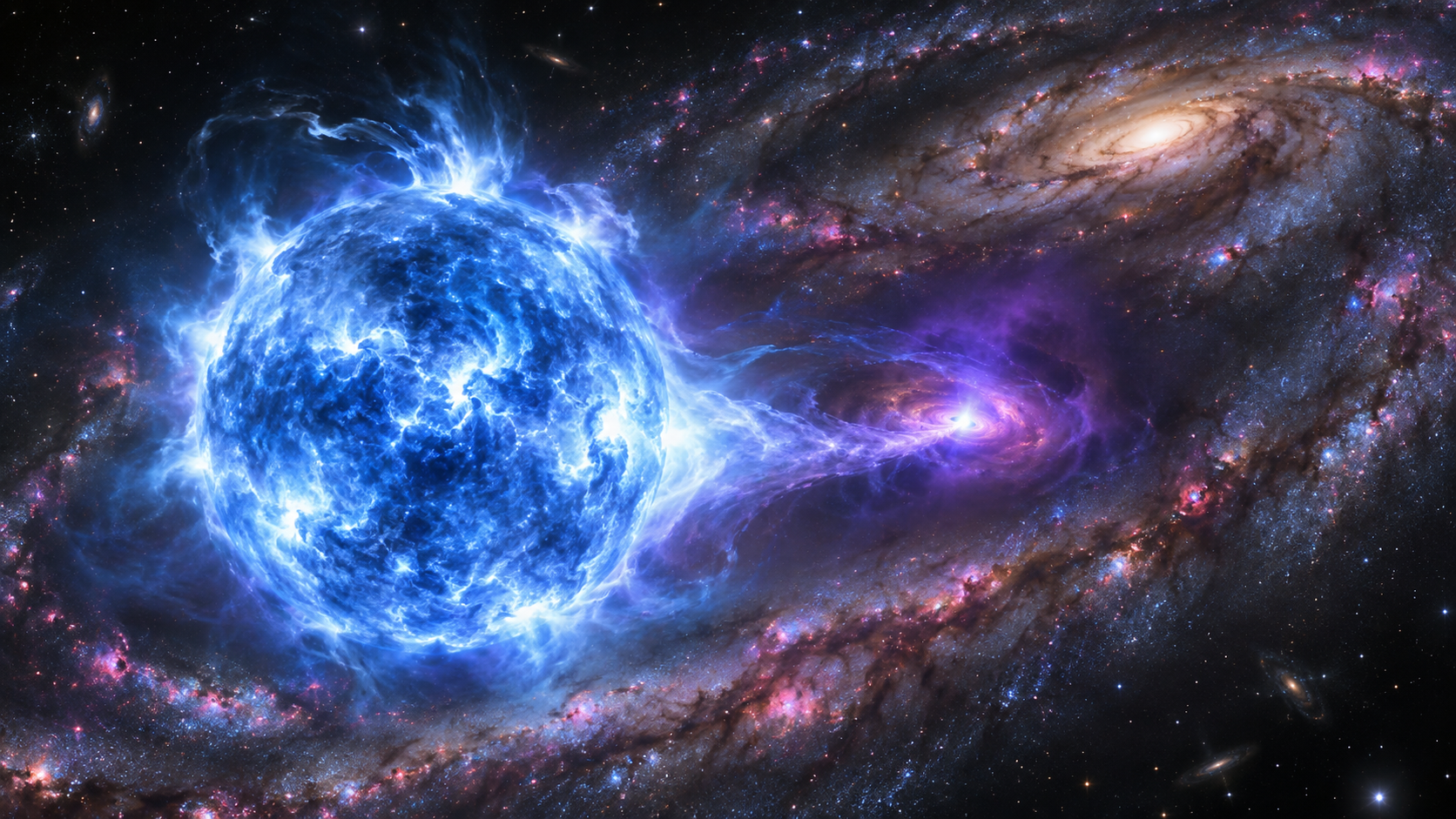
On 9 November 2026, NASA reported a new explanation for repeated outbursts from the massive star AT 2016blu in NGC 4559. Chandra detected an X-ray source, and researchers connect the events to a hidden companion that passes through its 113-day orbit and pulls material from the star.
Astronomers recorded at least 27 optical outbursts between 2012 and 2026 with similar timing. The repetition provided an important clue: random processes rarely follow such a stable schedule, while orbital motion naturally creates a cycle.
As the companion approaches the unstable star, the interaction can heat material to temperatures that produce strong X-rays. Chandra therefore complements optical observations, because human eyes and ordinary cameras see only part of the system's radiation.
AT 2016blu belongs to a class of objects capable of imitating some signs of a supernova without necessarily destroying the star. The term “supernova impostor” describes the resemblance of the observed outburst, not deception or an artificial origin.
The result demonstrates the importance of long observing records. One outburst may have many explanations, while dozens of events at the same interval allow astronomers to test an orbital model and predict future periods of activity.
Source: NASA.
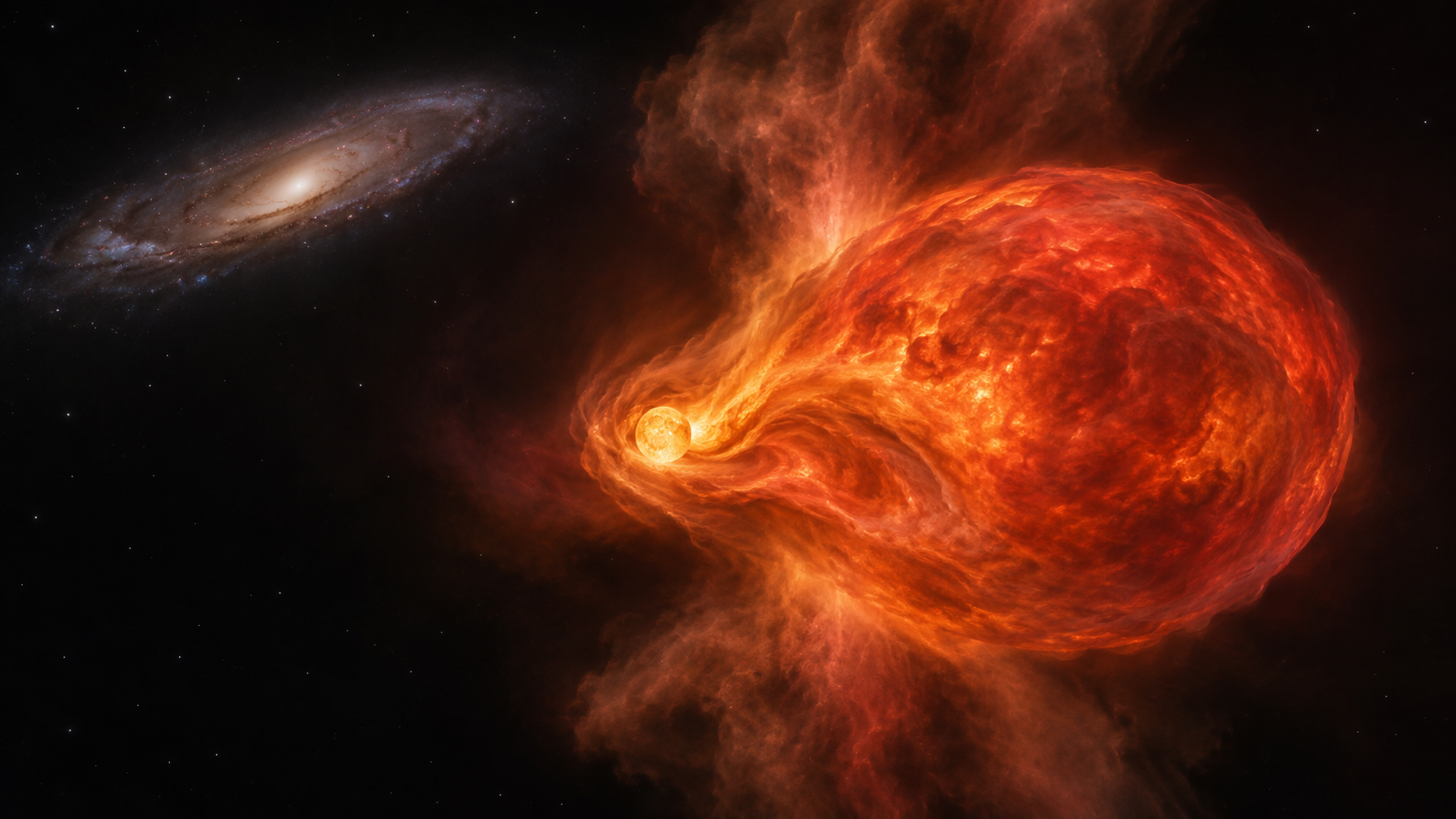
Cover: AI-generated illustration, not an official image.
Check clouds for your location on the NightSkyCast map