An exomoon candidate around a brown dwarf challenges familiar labels
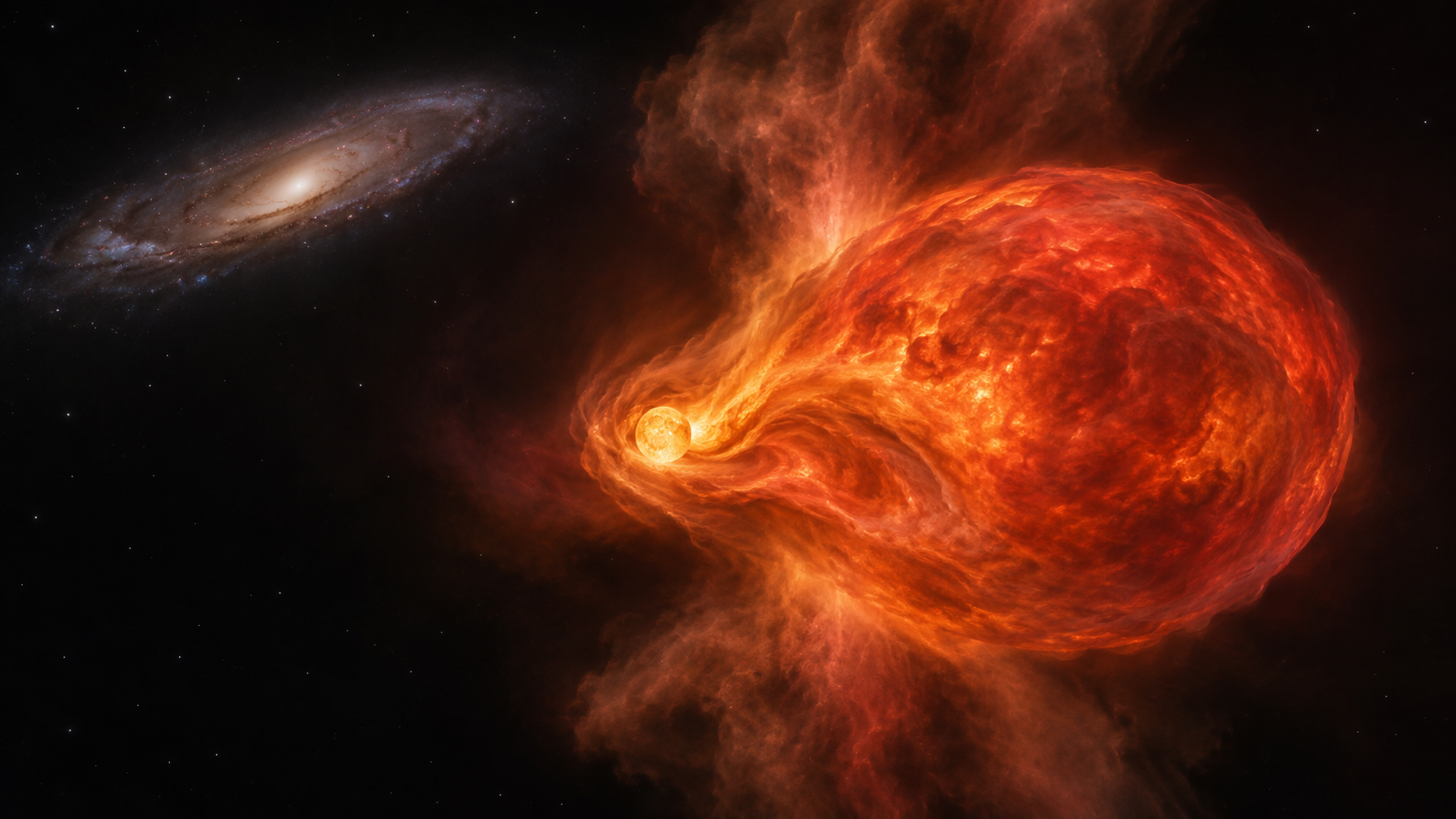
On 22 July 2026, ESO reported evidence for a satellite-like object in the CD-35 2722 system. It apparently orbits a brown dwarf that itself orbits a star. Confirmation is still needed: calling this the first indisputably discovered exomoon would be premature.
The difficulty involves both observations and the language used to describe the cosmos. The familiar Solar System picture seems straightforward: planets orbit the Sun and moons orbit planets. Other systems contain arrangements that do not fit this short description comfortably.
Brown dwarfs occupy a special position between ordinary stars and planets. Orbital location alone cannot describe their physical nature; astronomers consider mass, internal processes, and formation history.
Testing a proposed companion requires repeated observations. A nearby light source could be an unrelated background object, while small positional changes require careful measurements. Confidence increases when different datasets support the same picture of motion.
The key word for readers is “candidate.” It describes a scientifically interesting object with a particular degree of uncertainty, rather than either an error or a finished discovery. Follow-up checks will determine the object's eventual place in astronomical catalogues.
Source: ESO.
Cover: AI-generated illustration, not a telescope image.
Check clouds for your location on the NightSkyCast map