3I/ATLAS's chemistry offers clues to its interstellar origin
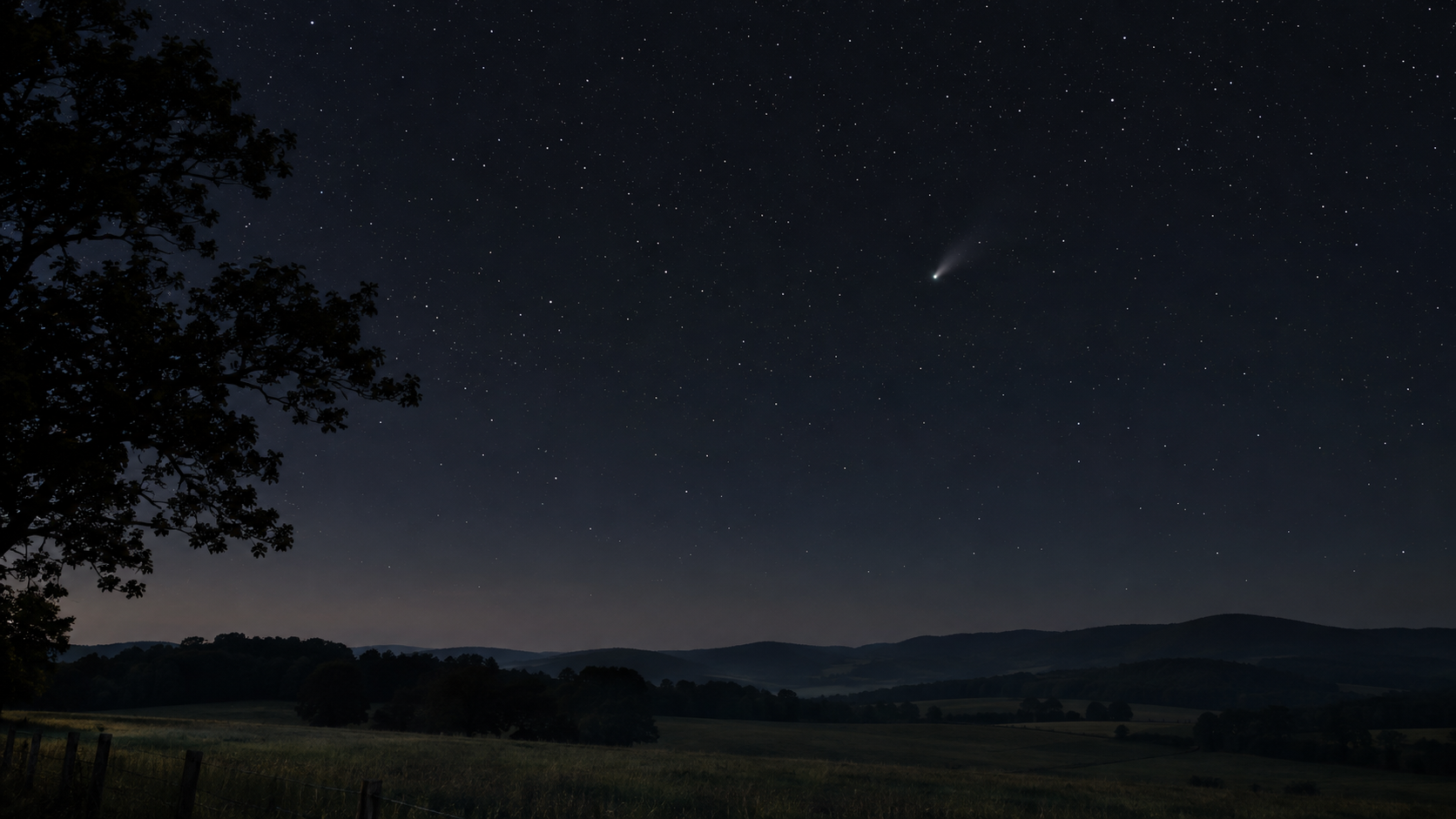
On 6 July 2026, ESO presented a VLT study of the interstellar comet 3I/ATLAS's composition. Its chemistry points to possible formation in the cold outer regions of an old stellar system. An age greater than the Sun's remains an interpretation of the evidence, not a direct measurement of its birth date.
An interstellar comet is especially valuable because it brings material from another system within reach of our instruments. Usually, researchers study other planetary systems through extremely faint light from distant objects. Here they can examine a comparatively nearby visitor.
Composition is not established from an ordinary colour photograph. A spectrum shows how brightness changes with wavelength; characteristic lines and bands help identify substances. Researchers then compare the results with models of chemistry and the formation of icy bodies.
Such comparisons require caution. Heating near the Sun changes cometary activity, and the observed gas does not necessarily represent the entire nucleus. Origins must therefore be reconstructed from several lines of evidence.
For observers, this is also a reminder that scientifically interesting comet news does not guarantee current visibility. Position, brightness, and accessibility on a particular night must be checked separately using up-to-date ephemerides.
Source: ESO.
Cover: AI-generated illustration, not a telescope image.
Check clouds for your location on the NightSkyCast map