Why a clear sky can still look hazy
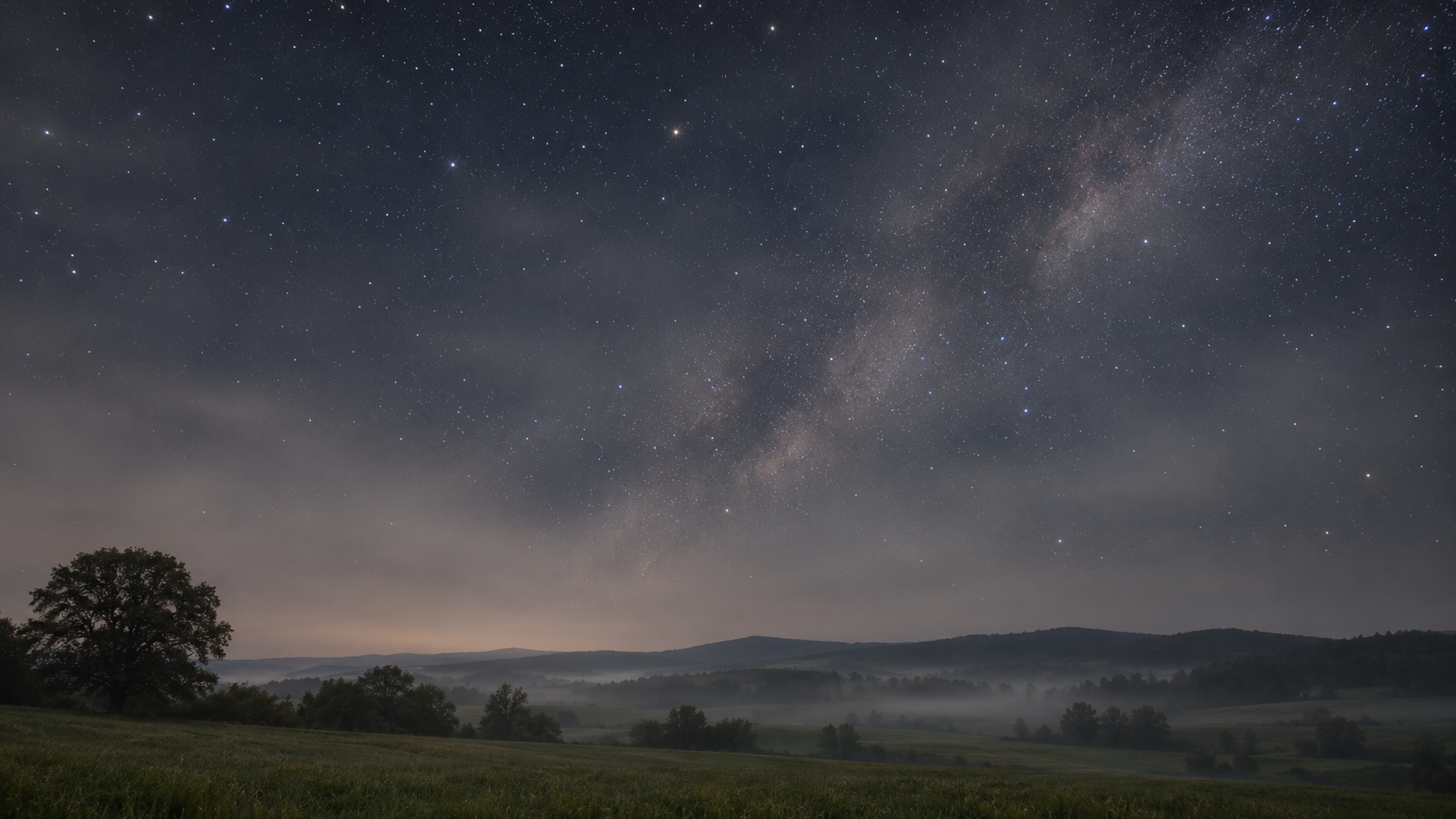
A sky without clouds is not always transparent. Water vapour, tiny droplets, dust and aerosols can remain in the air. They scatter light, making stars appear fainter and the background sky brighter. Haze is often strongest near the horizon because starlight passes through more atmosphere there than it does overhead.
Telling haze from clouds
Clouds usually form visible structures and may cover parts of the sky unevenly. Haze more often looks like a uniform pale veil: bright stars remain visible while fainter ones disappear. Humidity can contribute, but a single humidity reading cannot fully describe transparency; dust, smoke and air pollution matter too.
For observing, choose stars well above the horizon and compare different directions. If the Milky Way is hard to make out, the cause may be atmospheric transparency as well as city lighting. Check the cloud forecast separately, then assess the sky in person at your observing site.
Check clouds for your location on the NightSkyCast map