The Moon and stars in one night
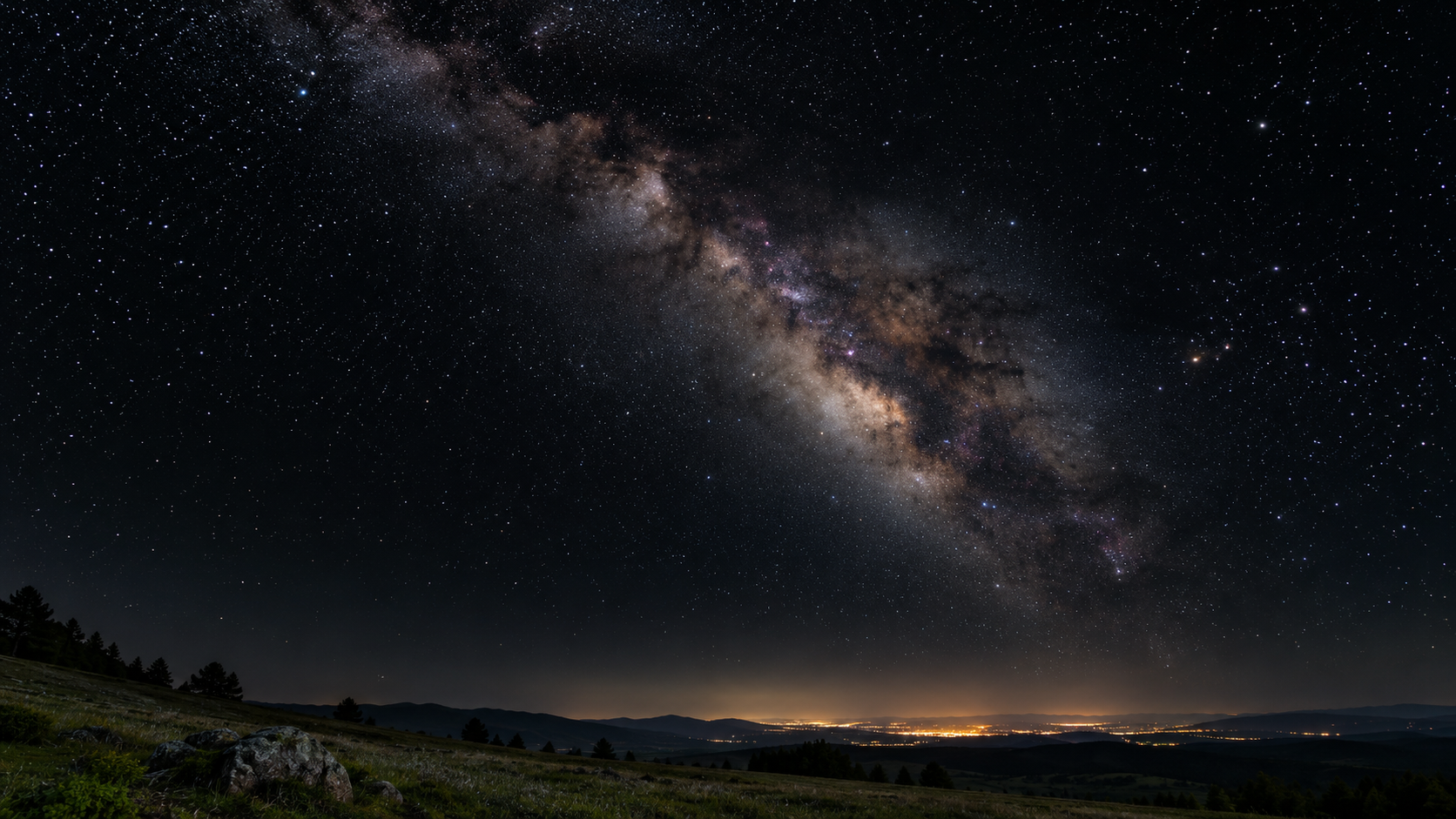
The Moon does not affect every observing target equally. Its light can wash out faint stars, galaxies and meteors, while bright planets and constellations remain visible. To plan an evening, check the Moon’s phase and its rise and set times for your exact location; these change daily and depend on where you are.
If you want the Milky Way or faint objects, choose hours when the Moon is below the horizon, or a night near new Moon. If the Moon is your target, observe it after dusk once it has risen. Binoculars or a telescope can help, provided they are held steadily.
A useful order
You can begin with objects that need a dark sky before moonrise, then switch to the Moon and bright planets. Do not rely on phase alone: a thin crescent low on the horizon may be hard to find, while a bright Moon high in the sky lights up more of the background. Check moonrise and moonset, cloud cover and your viewing direction before heading out.
Check clouds for your location on the NightSkyCast map