How to photograph meteors
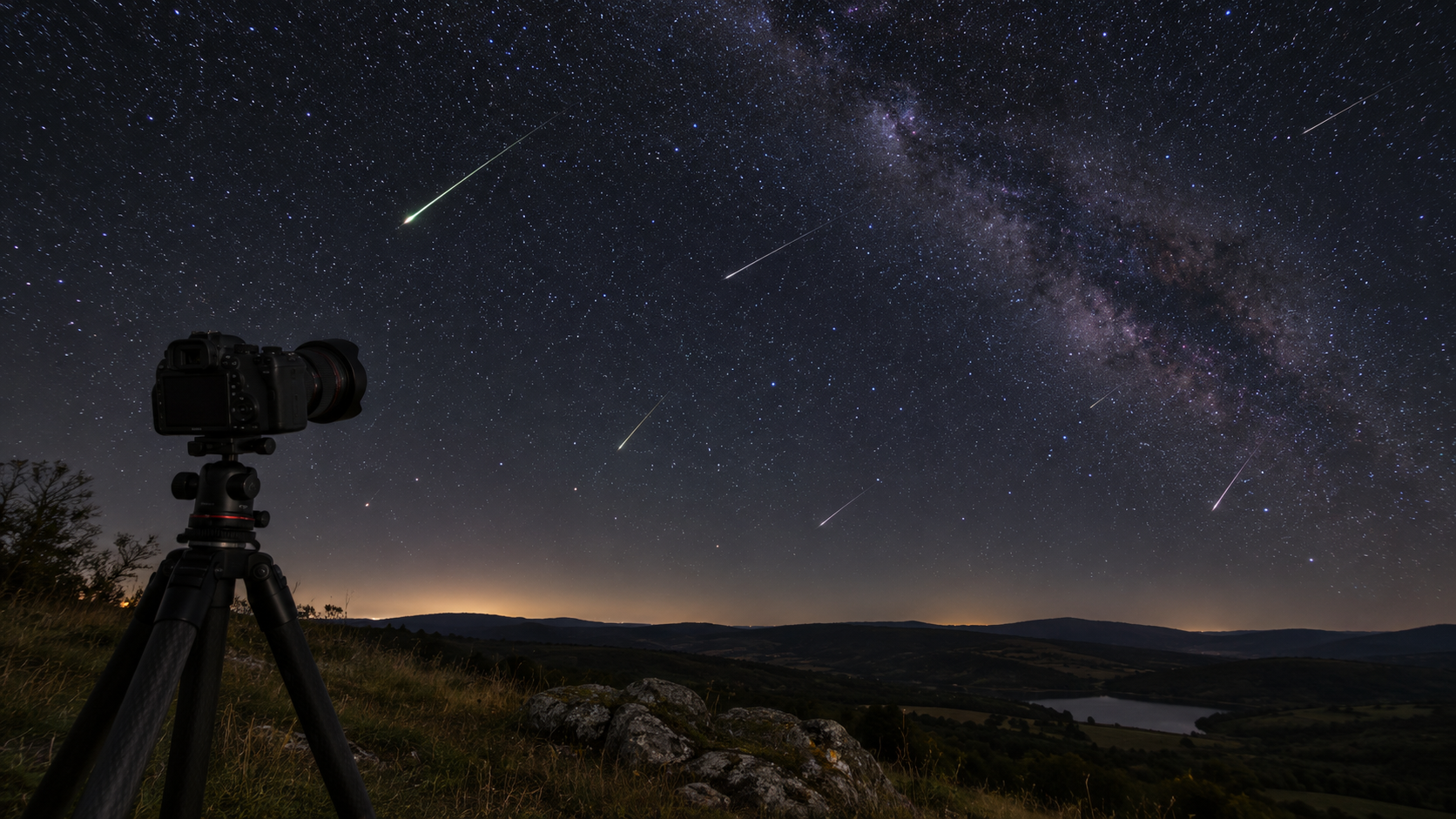
Meteors appear unexpectedly and can cross any part of the sky, so a wide-angle lens and many consecutive exposures work best. Mount the camera on a sturdy tripod, focus manually on a distant star and turn off autofocus. Take a test frame and check magnification: stars should remain points rather than stretch into obvious arcs.
Choose a dark site away from lamps and point the camera away from the Moon and city glow. Do not aim directly at a shower’s radiant: meteors often look longer farther from the point they seem to emerge from. Use interval shooting so the camera keeps working while you watch the sky. Most frames will not contain a meteor, but a sequence improves the chance.
What to bring
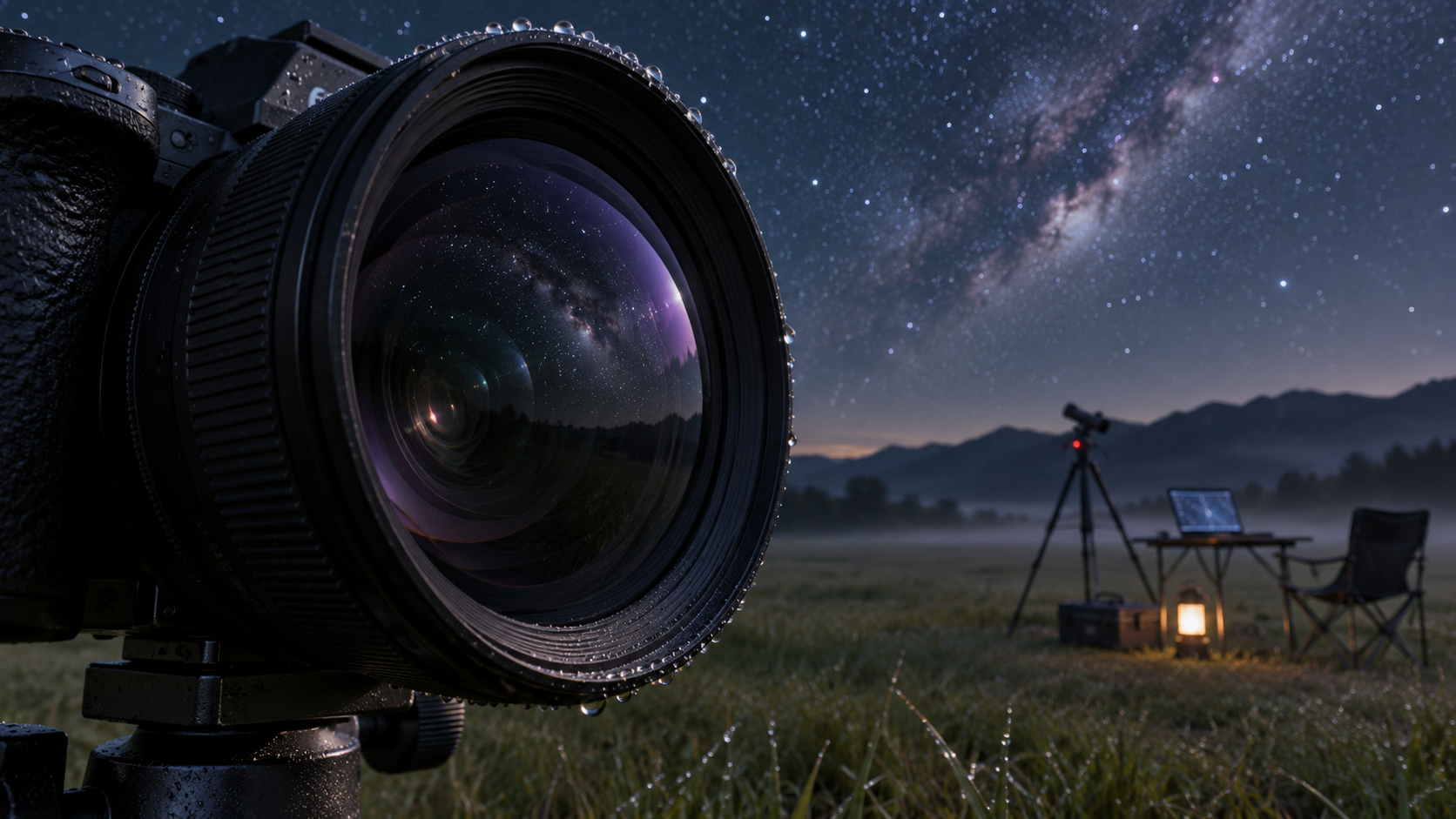
Pack a spare battery, memory card and dew protection. Batteries may drain faster on a cold night, and the lens can fog. Record the time and settings so you can match images to the shower’s activity later. First make sure the tripod is secure and does not obstruct other observers.
Check clouds for your location on the NightSkyCast map